
Parks and festivals/commercial events.
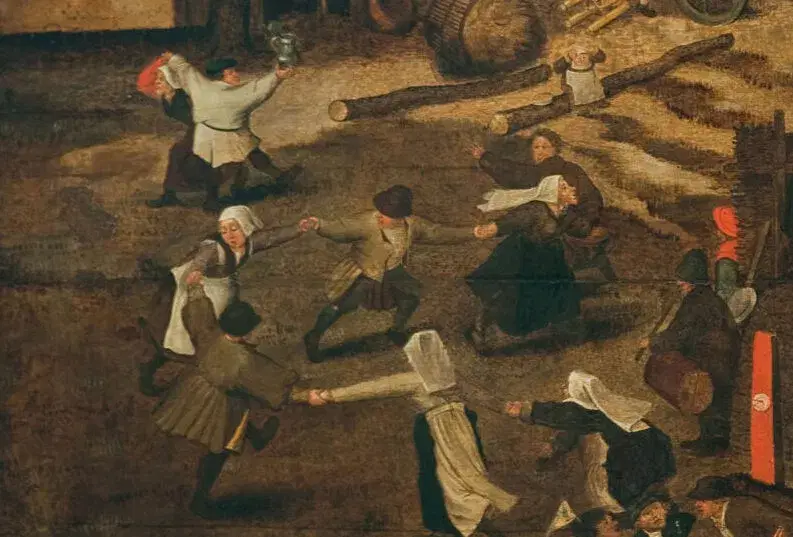
Festivals in parks – the ongoing debate. There are many festivals, musical events etc in parks all over the country this summer.
For example, there was a “food festival” in Bute Park, Cardiff, 29-31 May 2026. It was advertised as a fine event, boasting restaurant popups, banqueting area, produce market, beer & cocktails, live music, cooking demos, open fire cooking’ children’s entertainment, food tasting, wine tasting, food sustainability talks.
According to the website, visitors “were not permitted” to bring their own food or a picnic, except for baby food. It is not clear how this was enforced. Adult tickets were £11 and “adult VIP” £19.80. https://cardiff.feaston.co.uk/faqs
Mighty Hoopla was back in south London’s Brockwell Park from Saturday May 30 to Sunday May 31. There are many more to come. Festivals are now big money, and one company, Superstruct, operates more than eighty festivals around the world. https://www.superstruct.com/our-network
However, rows over planning permission are making these giant promoters pause. Many outdoor “gigs” now require full planning permission. Residents groups have successfully raised objections over unsafe noise levels, very large numbers of attendees, reduced public access and environment impact and damage, which is contrary to the original spirit of the British park. Naturally the police prefer events to be held in clearly defined, fenced-off areas, to prevent unauthorised access. The Lambeth Green Party strongly opposes the scale of commercial festivals hosted in Herne Hill’s Brockwell Park. A group called Brockwell Tranquillity have an informative Facebook page: https://www.facebook.com/groups/797965553719266/
In a significant development, the mighty Waterworks Festival 2026, can no longer take place at Gunnersbury Park on September 12th and 13th,. Doubts about planning permission made this necessary. “It will instead take place at The Cause on the same dates for a very special, one-off 16 hour marathon event over seven spaces”.
Interestingly the Lambeth Country Show, a free event held annually in Brockwell Park, which largely promoted local activities, will not go ahead in 2026, due to budgetary pressures on the council. This show pre-dates commercial festivals, and did not need large scale infrastructure such as stages. This show may well not return in its original form.
Considerations of environmental damage and who exactly would bear the cost of any such damage remain unclear in many instances. The affordability of tickets might introduce another level of keeping people out.
Fortunately Heaton Moor Park is too small for large commercial events. Our public parks are one of the understated triumphs of the British state, and whilst change will inevitably come, surely we must protect the principle that anyone can walk into a park, free of charge. Throughout history, powerful and wealthy groups have sought to impose their will on others; what is the balance between local fun and industrialised entertainment?
Jones K, Wills J (2005) The Invention of the Park: Recreational Landscapes From the Garden of Eden to Disney’s Magic Kingdom. Cambridge: Polity.
Smith A (2021) Sustaining municipal parks in an era of neoliberal austerity: The contested commercialisation of Gunnersbury Park. Environment and Planning A: Economy and Space 53(4): 704–722.
Starlings (Sturnus vulgaris)
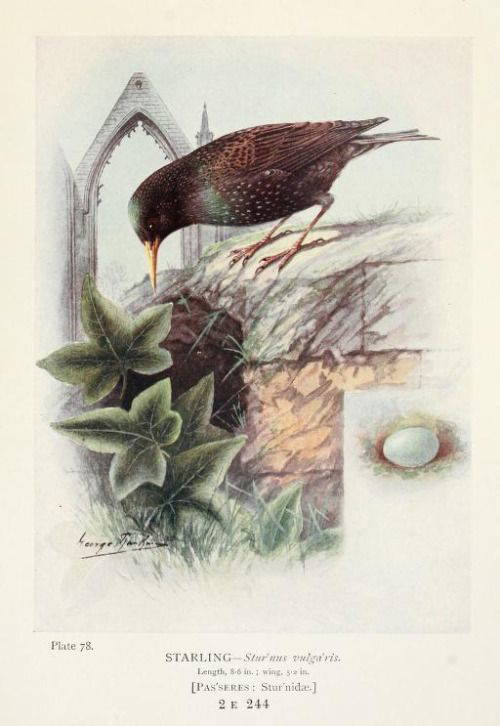
Starling numbers in the park seem to be recovering, although it is possible that there has been an influx of birds from northern and eastern Europe.
They are smaller than blackbirds, with a short tail, pointed head and triangular wings. Although they look black at a distance, they are very glossy with an iridescent sheen of green and yellow and purple. However, they are still on the Red List of conservation concern. They can form extraordinary, spectacular flocks known as murmurations. These were regarded by the Romans as messages from the gods.
Starling may derive from “stare”. They are often called “shepster”, as they can be seen on sheep’s backs, pecking off ticks. They are also called “gyp starnil” in some regions. In Ireland it was known as “druideog”.
There are many legends about these birds, which are thought to have the power of imitating the calls of other birds and even human speech.
The bird stars in the story of Branwen, in the Mabinogian. Mistreated by her husband, Branwen sends a starling to take a message to her brother Bran in Wales. There followed a civil war between Wales and Ireland in which Bran and all but seven of his men were killed.
https://web.archive.org/web/20041028031001/http://www.geocities.com/branwaedd/branwen.html
In the “Battel of the Birds”, 1621, from Samuel Pepys collection of ballads, two huge, opposing bands of starlings formed on either side of the city of Cork. Huge numbers of birds were left dead or dying after the battle.
The text of a ballad, A Battle Of Birds Most Strangely Fought In Ireland (1622), is preserved today within the famous collection of Samuel Pepys housed at Magdalene College, Cambridge.
https://www.magd.cam.ac.uk/visitors-and-conferencing/pepys-library
Yeats writes of the “stare” in this poem.
The bees build in the crevices
Of loosening masonry, and there
The mother birds bring grubs and flies.
My wall is loosening; honey-bees,
Come build in the empty house of the stare.
We are closed in, and the key is turned
On our uncertainty; somewhere
A man is killed, or a house burned.
Yet no clear fact to be discerned:
Come build in the empty house of the stare.
A barricade of stone or of wood;
Some fourteen days of civil war:
Last night they trundled down the road
That dead young soldier in his blood:
Come build in the empty house of the stare.
WB Yeats Meditations in time of civil war…..1928
There is a beautiful electronic composition inspired by the mass flight of starlings on Spotify. Registration is required for this.
Another bird which can gather in very large numbers is the pigeon. “Pigeon wars” have broken out in Norwich: a flock of around three hundred pigeons is annoying traders and shoppers, in large part through the unpleasant amount of droppings. Like other demonised creatures, such as the fox, they enjoy pizza, chips and burgers which are plentiful locally, discarded with a lot of litter.
Norwich council has sent a hawk on occasion in an attempt to intervene. Contraception is a possibility, as evidenced in Paris, Brussels and Barcelona, but this is not yet licenced in the UK. A single pair of pigeons can produce twelve squabs per annum.
Sadly, they are given little credit for service to their country. Pigeons carried vital messages during two world wars, over dangerous battlefields and great distances, with a creditable success rate. In World War I, a pigeon called Cher Ami delivered a message which contributed to the saving of the 77th Division, losing a leg in the process. She was awarded a Croix de Guerre. GI Joe, in Colvi Vecchia, Italy, helped call off a planned allied air strike and saved many lives. Thirty two pigeons have won the Dickin Medal for gallantry. Norwich city may prove a more difficult battlefield than the European theatre of war……
Nettles.
A shout out to the clumps of ferocious stinging nettles in the park. These are great wildlife attractors. Birds love them, ladybirds find them teeming with aphids and several butterflies use them as food plants. They are a free and plentiful alternative to spinach. During World War II, children were encouraged to collect them so that they could be used to produce a dark green dye for camouflage, and nettle soup was regularly cooked and eaten. It does not seem to be on the menu in any of the local restaurants. Anyone wishing to grasp this will find recipes and ideas in The Wartime Kitchen and Garden, on Internet Archive. (Registration required to “borrow” this electronic text)
https://archive.org/details/wartimekitchenga0000davi_f8o0
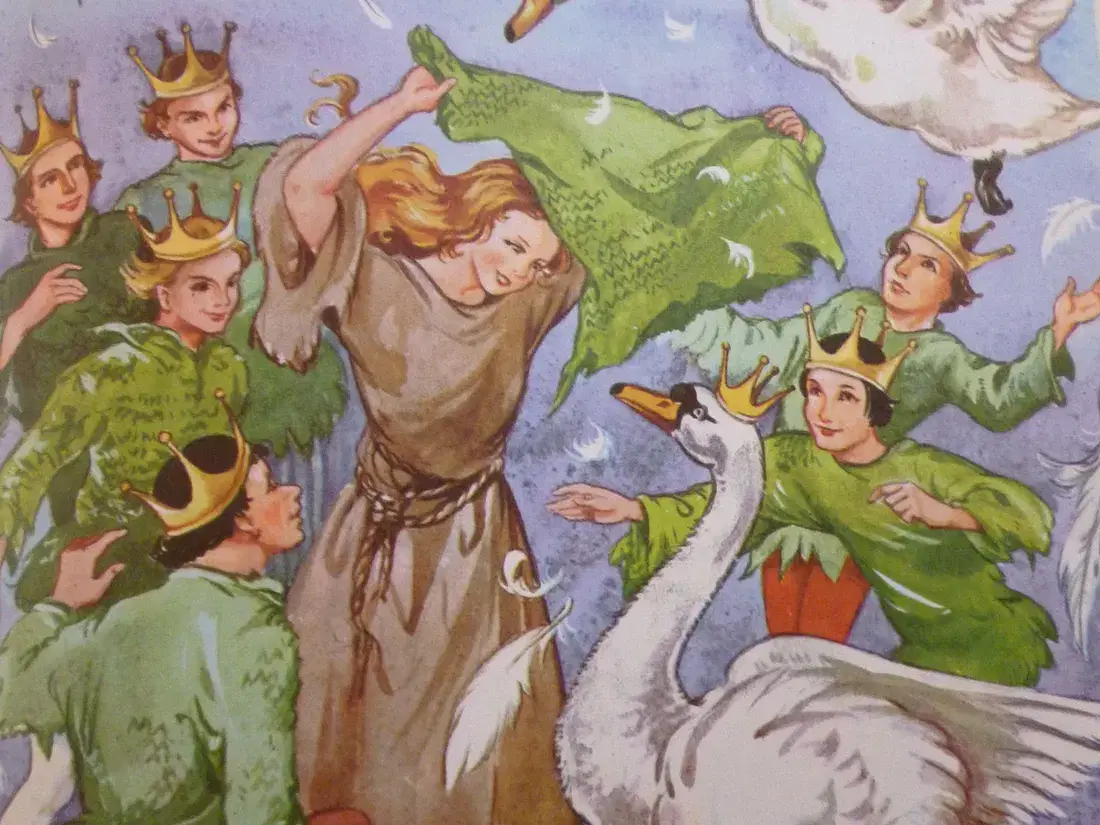
In one of Hans Andersen’s loveliest fairy tales, The Wild Swans, princess Elisa is guided by the queen of the fairies to gather stinging nettles in graveyards to knit into shirts that will eventually help her brothers regain their human shapes, after they were turned into swans by a wicked stepmother. Searches for a suitable knitting pattern have so far proved unsuccessful – wake up, Heaton Moor Park Knitting Group!
https://andersen.sdu.dk/vaerk/hersholt/TheWildSwans_e.html
The dawn chorus
Research continues to show that populations of many of our most familiar songsters are on a downward trend……
https://www.bto.org/our-work/news/press/dawn-chorus-depleted-songbirds-crash
Prof Juliet Vickery, CEO of BTO, says, “Despite decades of effort to reverse some of the severe challenges faced by many of the UK’s birds, we are still witnessing catastrophic declines across many of our landscapes. And this matters because these songsters are important indicators of the health of our natural world – a natural world on which we all depend.”
Oak apple day
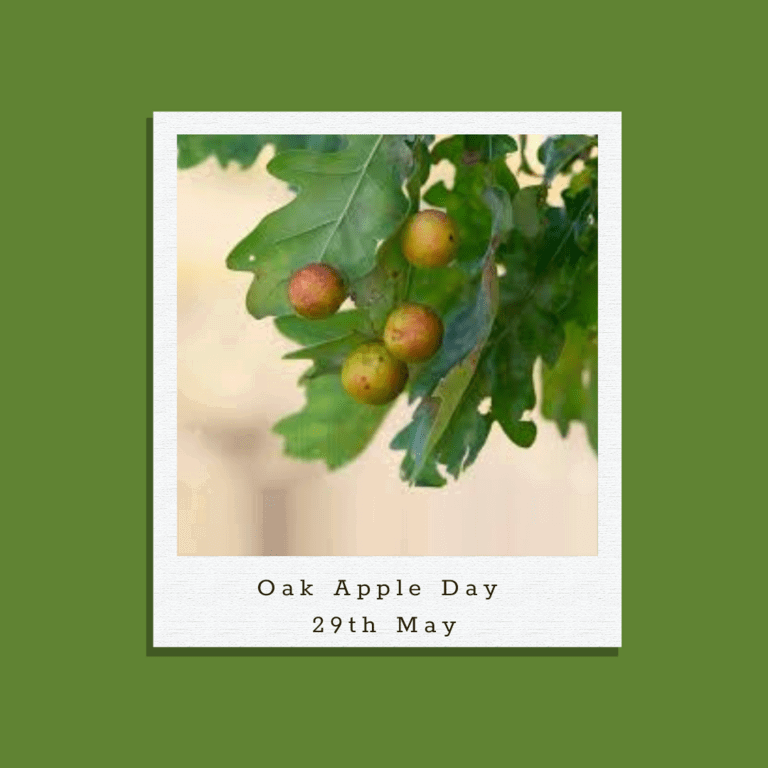
May 29th is Oak Apple day. Restoration Day, more commonly known as Oak Apple Day or Royal Oak Day, was an English, Welsh and Irish public holiday, observed annually on 29 May, to commemorate the restoration of the Stuart monarchy in May 1660. In some parts of England the day is still celebrated. It has also been known as Shick Shack Day, or Oak and Nettle Day.
In 1660, the English Parliament passed into law “An Act for a Perpetual Anniversary Thanksgiving on the Nine and Twentieth Day of May”, the Observance of 29th May Act 1660 (12 Cha. 2. c. 14), declaring 29 May a public holiday “for keeping of a perpetual Anniversary, for a Day of Thanksgiving to God……” There is a legend that King Charles II, in 1651, successfully hid in a tree named the Boscobel Oak, while running away from a group of Parliamentarians during the English Civil Wars.
https://en.wikipedia.org/wiki/Royal_Oak
There are many galls in the park oaks, each created by a different species of gall wasp, such as the knocker, marble galls or current galls. In the Middle Ages, ink was made by crushing marble galls and adding water, iron sulphate and gum Arabic and it is rumoured that Magna Carta was written in this. Surrey Art School have recreated a recipe for this:
Not recommended for electronic printers. There is a Twitter feed for British Plant Galls……
British Plant Galls @britgalls
Cuckoo spittle….
Sadly, it seems not one cuckoo has been heard in the park yet. But cuckoo spittle can be seen, caused by spittlebugs, or froghoppers, sap-sucking insects related to cicadas.
This is a frothy, white, saliva-like foam commonly found on plant stems and leaves in spring and early summer. It is not spit from birds; it is a protective covering secreted by the nymph (immature stage) of the froghopper.
It is galling, but there don’t seem to be any frogs about either.