
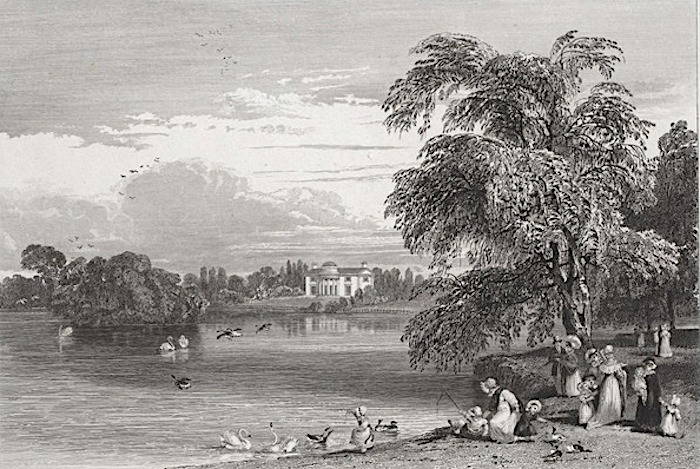
The Victorian concept of the park….
The Victorian park is often known as the “lungs of the city”. The phrase “lungs of the city” is usually attributed to Frederic Law Olmstead, one of the most famous landscape architects. By now it might be considered something of a cliché: however, it has been a very powerful idea for a long time and still remains so, as greenspaces and urban trees are held to be a key part of any strategy in improving air quality.
The early history of Heaton Moor park is set out on the website:
In 1894, Lord Egerton of Tatton donated approximately 4 acres of land to Heaton Norris District Council. The land was placed into a charitable trust for the free use and enjoyment of the public for play, pleasure and recreation. This became Heaton Moor Park and the official opening took place on 17 July 1897 to coincide with Queen Victoria’s diamon d jubilee celebrations.
Over the next few years, the park developed into an attractive open space for local residents providing for their enjoyment: two bowling greens, three tennis courts, a croquet lawn, formal flower beds, a bandstand, a greenhouse and a pavilion.
Donating a park to a locality was a good way for the Victorian rich to be remembered. There were no urban parks in Britain before, approximately, the 1940s. Cities were smaller, and rural areas closer. Some central London parks were converted from graveyards which had become overcrowded. As towns began to grow and sprawl, the natural world seemed to be in retreat. Campaigners such as Robert Peel began to champion the need for public green spaces within towns, which would be free and open to all. This egalitarianism has survived until the present day, but has been challenged recently by the issue of commercial events in parks.
Some examples of the early Victorian park are Cannon Hill Park, in Birmingham, which opened in 1873, Princes Park in Liverpool, 184s, Birkenhead Park, 1847, and Victoria Park Bristol, 1880.
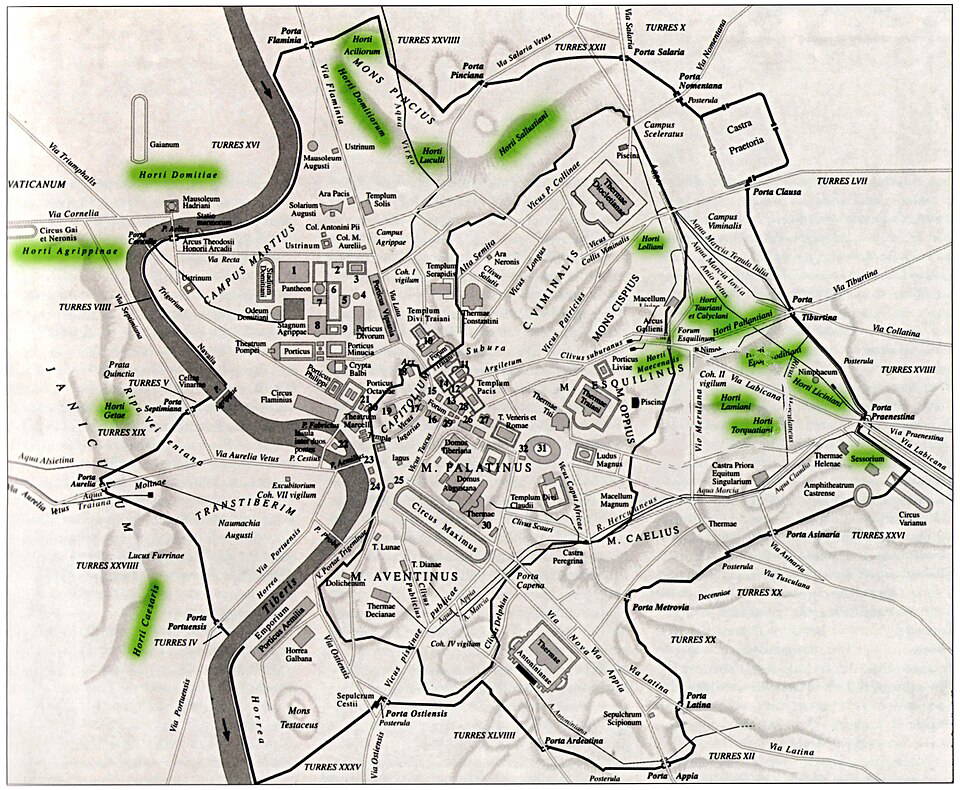
The concept of the health-giving value of parks can be traced back to great antiquity, with the construction of the hanging gardens of Babylon, in what is now Irqu. In Roman times, the Garden of Sallust (Latin: Horti Sallustiani) was an ancient Roman estate including a landscaped pleasure garden developed by the historian Sallust in the 1st century BC, and the statesman Lucullus built a luxurious garden, or hortus, for his court and followers. In the 3rd century AD the total number of horti occupied about a tenth of Rome and formed a green belt around the centre.
Skip forward to Victorian times in England, and the concept of the park became associated with a place which would provide an alternative to lower class hobbies such as drinking or gambling. Early advocates of parks thought that relief from overcrowding in cities would dilute foul air and reduce disease. By the mingling of social classes, it would facilitate and encourage better behaviour, foster cohesion and a sense of civic duty. The ethos was essentially open and democratic. For such social integration to work, localised infrastructure, such as parks, was important.
Thanks to the British brass band movement rising in popularity in the Victorian era, a bandstand was built in many parks, hosting concerts and other entertaining performances. Many very beautiful fountains were also created, and large, ornate glasshouses.
Parks also took on an aesthetic responsibility over and above being beautiful and a refuge from the busy city. Victorian designers liked stylistic unity, and this can be seen in the historical integrity of our own park, laid out in four quadrants.
The passing of the Public Health Act 1848 required public health boards to provide land for parks. These parks had free entry. They had footpaths and space for games, dog walking.
Some parks now host paying events in the summer. Many greatly enjoy music festivals etc, but many argue that these events undermine the public and equal nature of the spaces, positing them as playgrounds for the rich or affluent.
Festivals, filming etc in parks mean fenced areas, restrictions on access – which is directly at variance with the ethos of the “park”. Such events are defended by the regularly used excuse that anything which makes money and provides jobs, albeit temporary ones, must be protected at any price.
Fences and railings restrict access but they also affect how the park is perceived, how certain groups might be felt more important than others. In Heaton Moor park the bowling green is enclosed by railings; the children’s play area is also fenced, with the reasonable objective of keeping children in and dogs etc out. The tennis court is fenced, and has to be booked and paid for, although users can be inventive in circumventing this. The Friends of the Park still stage still stage free, community-oriented events, where all are welcome. There have been many music festival events in parks in London, and at Heaton Park, Manchester, generating much controversy. It is not known exactly how much of the funding generated trickles down to the local community.
LondonCentric has reported extensively on the debate about the commercialisation of Brockwell Park.
https://www.londoncentric.media/p/mighty-hoopla-field-day-festivals-back-on
Strangely, parks have come to be an entity that has to be defended, that the public must fight for, rather than an undisputable public good. All public bodies are short of money and resources are scarce; this leads to local conflicts of strategy, oversight, leadership.
In 2016 the Government called a Public Inquiry into the Future of Public Parks. It questioned if their existence itself was in danger – something unimaginable when they were enacted through the 1848 Public Health Act.
https://publications.parliament.uk/pa/cm201617/cmselect/cmcomloc/45/45.pdf
Are heritage and historical significance sufficient bulwarks against commercial intrusions which raise much needed funds? Does the heritage value of the park still offer a tangible link to the past, which should be defended?